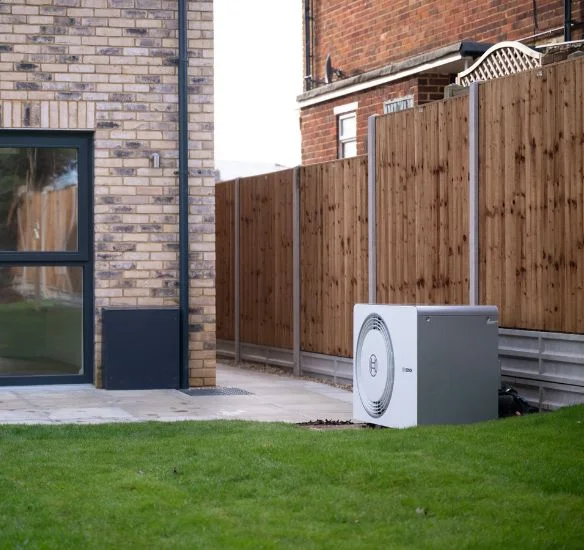

Hear from Ed Thomas on...
Heat pumps, policies, and the future of electrified heating
This year, from 12th October to 16th October 2026 it’s National Heat Pump Week. Head of Government and External Affairs, Ed Thomas, spoke about the heat pump market in the UK. Heating homes accounts for about a fifth of the UK's emissions*. The Government sees heat pumps as a key way of delivering its net zero targets, and central to its Warm Homes Plan.
It’s a great opportunity to take stock and look at what progress has been made adopting the technology, as well as the challenges involved in such a shift. In Germany, heat pump sales are now around half of heating appliance sales** are we on course for the same thing to happen in the UK?
* https://www.gov.uk/government/publications/warm-homes-plan/warm-homes-plan-html
** https://www.cleanenergywire.org/news/half-new-heating-systems-sold-germany-are-heat-pumps

The current heat pump market
At Worcester Bosch, we strongly support the move to decarbonise heating through delivering the right technology for the right customer, backed by trusted advice and genuine choice. Heat pumps are a growing part of our extensive technology portfolio, and we’re launching a new product later this year.
In markets like Germany and Scandinavia, Bosch heat pumps are the main commercial focus. We think it will take some time for the UK to catch up. In the Warm Homes grant, the UK Government has set a target to reach 450,000 annual heat pump installations by 2030, but we are quite a long way from that as only 125,000 were sold last year which is less than 10% of the gas boilers sold. While we’re very keen for the UK heat pump market to grow, at the moment it remains relatively small.
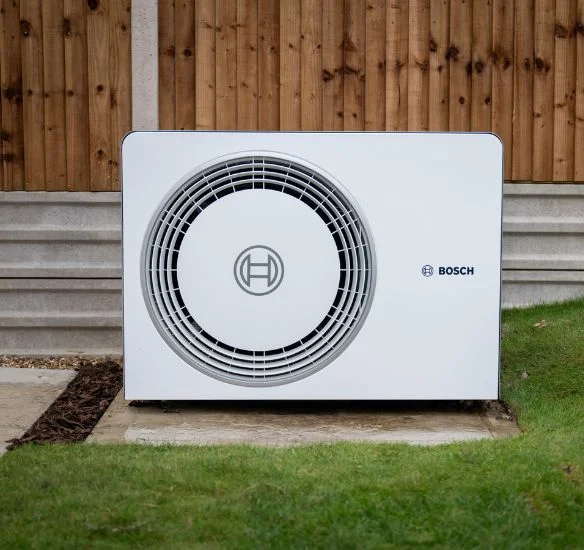
Overcoming the heat pump barriers
This isn’t because the technology isn’t up to standard. Heat pumps can be highly efficient, reliable and can be installed in many homes. There are, however, a number of interwoven factors that can impact heat pump adoption, from longer design methodologies and a lack of customer understanding, through to commercial viability and the long-term economics of running a heat pump at home.
It’s also increasingly less about a lack of skills, although more needs to be done here. The Heat Pump Association (HPA) thinks enough people are being trained in heat pump installation to meet Government targets. We must aim to create the right environment for installers to turn their training into action. At Worcester Bosch, we have invested considerably in training installers in heat pumps as a provider of the Heat Pump Training Grant.
Moving forward with government initiatives
We see the main barriers as being economic and behavioural. Heat pumps are more expensive than gas boilers, and this can deter consumers in a cost-of-living crisis. If we are to help more people with heat pump adoption, it should be joined by more flexible finance options – whether that be through grants, financing options or other approaches.
Grants can’t help the consumer with the next and more difficult part of the problem however. In the UK, a unit of electricity remains considerably more expensive than a unit of gas, and this "spark gap"^ is much larger than most European and global economies. This makes it much harder for UK homeowners to make the switch from gas to electric than might otherwise be the case. Why would you pay more if you don’t have to? The reality is far more nuanced, of course, and the efficiency and effectiveness of a heat pump can be impacted by the fabric of the home, how it’s used and the energy tariff too.
^https://www.energy-uk.org.uk/publications/energy-uk-explains-the-spark-gap/
The lack of consumer incentives to switch has slowed heat pump adoption. It’s the equivalent of trying to drive a car with the handbrake on. Frustratingly, low demand is now slowing things down even further. The HPA thinks more than a third of those who complete heat pump installation training are not actively using their skills, because the lack of demand means there’s no opportunity to use their new skills- meanwhile manufacturers don’t see the growth required to justify investment in the UK market.
Looking ahead
We can see a slow and steady increase in sales over time, and we are focusing on the technology more. Installations are still behind the Government’s targets. One of the best things ministers can do to change this, is to deliver a reduction in electricity costs that benefit the consumer.
Ultimately, consumer buy-in is key to decarbonising domestic heat in the UK, and there’s a vital role for the Government in fostering and encouraging the growth of the heat pump market. This means building consumer confidence, upskilling installers and – most crucially of all – action on energy costs.