

Heat pump technology has come on leaps and bounds over the past decade, so it’s no surprise that they’re a more popular choice than ever before in the UK. And now that modern heat pumps are more than capable of keeping up with the Great British weather, the only question remaining is price. We know that hey’re more expensive than boilers, to buy and install, but we also know they’re cheaper to use on a day-to-day basis. So in the long run, which is better?
What is a heat pump?
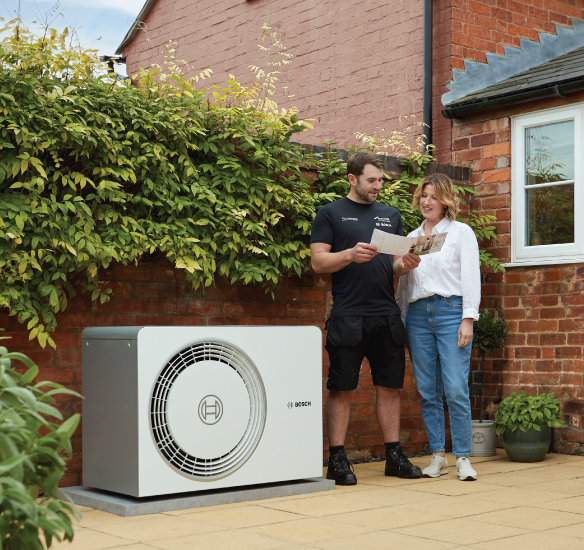
Let’s kick it off by making sure we know exactly what a heat pump is. Heat pumps are a type of heating technology that takes the ambient temperature of the outdoors, heats it up via compression and refrigerant gases, and then transfers it to your home. This heat is most commonly used to power your hot taps, radiators, and underfloor heating.
Why efficiency makes the difference
Efficiency is the key to understanding running costs. An air source heat pump can generate three to four times as much heat as the electricity it uses.
This means that for every unit of electricity going in, you’re getting several units of heating back. Over time, this efficiency can balance out the higher installation cost and make a noticeable difference to how much you spend keeping your home comfortable.
Why choose electrified heating from Worcester Bosch?

Electrified heating
Trust in the UK's most awarded boiler brand^ to help you move to a new era of home heating.

Lower carbon heating*
Lead the way and reduce your carbon footprint with a heat pump or a hybrid heat pump.

Peace and quiet
Enjoy a bit of hush with one of our Quiet Mark certified heat pumps.
Top tips to keep your heat pump costs low
To make sure you keep the cost of running your heat pump as low as possible, there are two main things to remember:
Never turn your heating off
Heat pump technology is designed to maintain a consistent temperature in your home (unlike a boiler, which can be switched on and off whenever you like.) If you switch your heat pump off, it can take a long time (and therefore cost a lot of money) to get your home back up to temperature. If it’s warm outside or you’re going to be away, just turn your heat pump down – not off.
Give your heat pump time to react
The same applies for adjustments during the day or over the seasons. Keep an eye on the weather and try to anticipate the level of heating you’ll need. When it comes to heat pumps, it’s best to experiment. Try turning your temperature up or down by a degree or two, rather than dialling it up for instant heat.
Consider a hybrid system
If you want more control over your heating, but you still want to lower your carbon footprint, we recommend looking at hybrid heating systems. By combining a heat pump with a boiler, you’ll get all the efficiency and environmental benefits of a heat pump for most of the year – but when it’s cold or you need an immediate boost, your boiler can pick up the slack.

Thinking long-term
It’s true that installing an air source heat pump usually costs more upfront than a boiler. But what you’re investing in is a system built for long-term value:
-
Efficiency that makes the most of the energy you use.
-
Simple servicing and minimal day-to-day upkeep.
-
Technology designed to meet modern and future heating needs.
-
Potential financial support through government schemes to make installation more affordable.
Over the lifetime of the system, many homeowners find the benefits add up to more than just savings on bills, they add up to greater comfort and peace of mind.
Find out more about heat pumps
To find out more about heat pumps, including the way they work, the costs involved, and the process for getting one installed in your home, visit our Heat Pumps page.
Sources
^Based on Which? Best Buy endorsements.
*A heat pump when running emits less carbon dioxide than a gas or oil boiler. A hybrid heat pump system when running emits less carbon dioxide compared to only using a gas or oil boiler.