
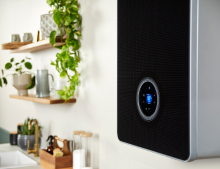


Prepare your home and heat pump for winter with our top tips to make sure your heating system runs smoothly and efficiently.
Steps to get winter-ready
We understand how important it is for you to get the most out of your heat pump, which is why we have put together our top tips and tricks below to keep your heat pump working efficiently this winter.
We recommend taking a look at our brochures for more specific product guidance. You can find this here.

How can I manage the temperature of my home when it gets colder?
As the weather gets colder, your heat pump will adjust its flow temperature to make sure your home remains at a comfortable level. You can also slowly adjust your thermostat to allow your heat pump to heat up slowly to change the temperature of your home. But avoid setting an artificially high temperature, only set the temperature you need.
To change the temperature of your home, use the thermostat to gradually adjust to your liking. Your heat pump works best when it’s running continuously, rather than using energy to fire up and cool down like a boiler does. You don’t need to adjust the settings on your heat pump unit, your installer will apply the right configuration for your home.
Why can I see water vapour rising from my heat pump?
In colder weather, you might see water vapour rising from your heat pump. Don’t worry, this is a built-in feature to help stop it from freezing. It should only last a few minutes.


Why is it important to allow air to flow around my heat pump?
Your heat pump works by drawing in air, so during autumn and winter, keep an eye out for leaves or branches that may get caught around the back of the heat pump and the thin blue/silver vents. Use a brush to remove any garden rubbish to prevent potential blockages.
Heat pumps may get dirty due to bad weather or build up of dirt/dust too. We recommend using warm water and a clean soft cloth to wipe down the outer casing.
After a wet and muddy walk, don’t be tempted to dry clothes or towels on your heat pump or your radiators. This can reduce comfort levels by cooling down your heating system’s overall temperature and make your heat pump less efficient. If the unit is covered, or has boxing around it, it may cause noise levels to increase too.
Click here to watch our one minute autumn maintenance video.
Check your water pressure
It's best to check the water pressure a couple of times a year, or more often if you notice performance changes, or after bleeding radiators. To run at it's best, your heat pump's pressure gauge should read between 1.0 - 1.5 bars. If it falls below this, you can easily top up the water by repressurising the system.
Watch our video guide for step-by-step instructions.
How to repressurise your heat pump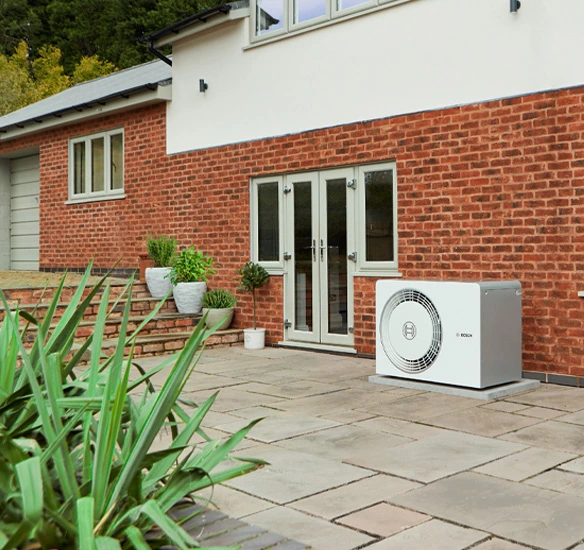
Insulate your pipes
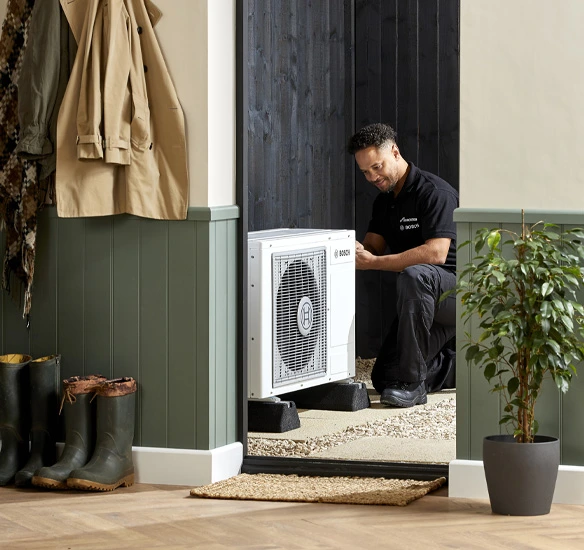
Insulating external pipework around your heat pump can help to keep your system running more efficiently. It prevents the water pipes from losing energy unnecessarily and from freezing. Therefore, your system will use less energy to heat the water in the property, which will reduce your overall electricity consumption. A qualified installer can help with insulating pipes if they aren’t already insulated.
For more home heating tips and advice check out our advice page
Guidance for first time heat pump owners