

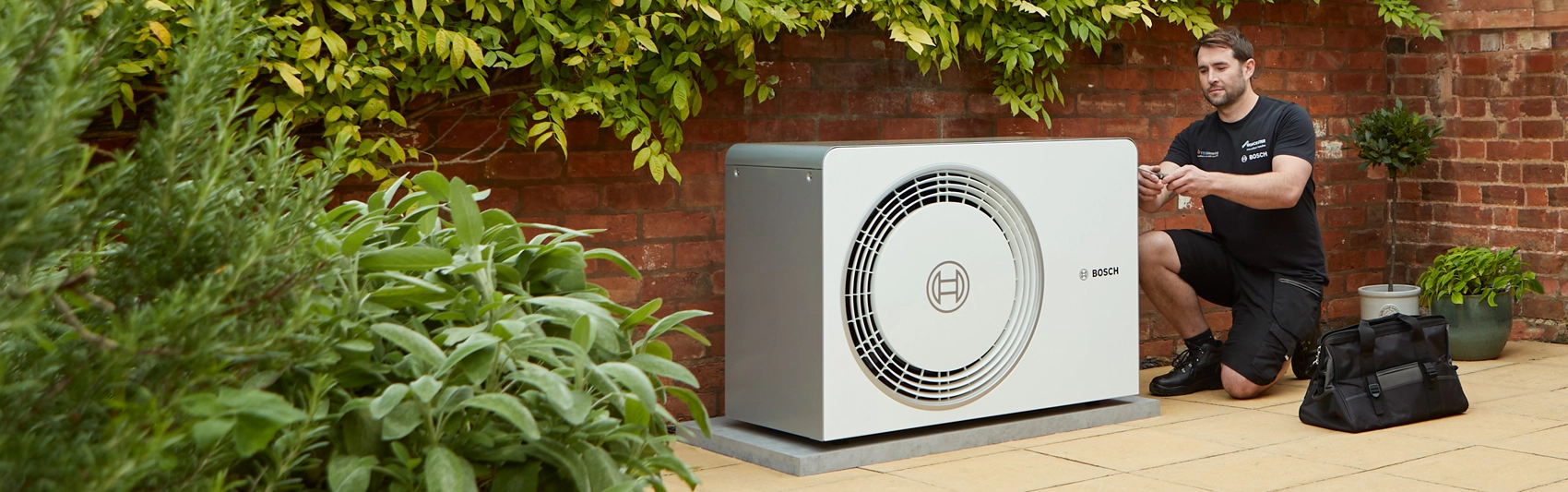
Heat pumps capture warmth from outside either from the air or from the ground and move it indoors to provide heating and hot water. This process makes them an efficient way of keeping your home comfortable throughout the year.
The different types of heat pumps
How do Air Source Heat Pumps work?
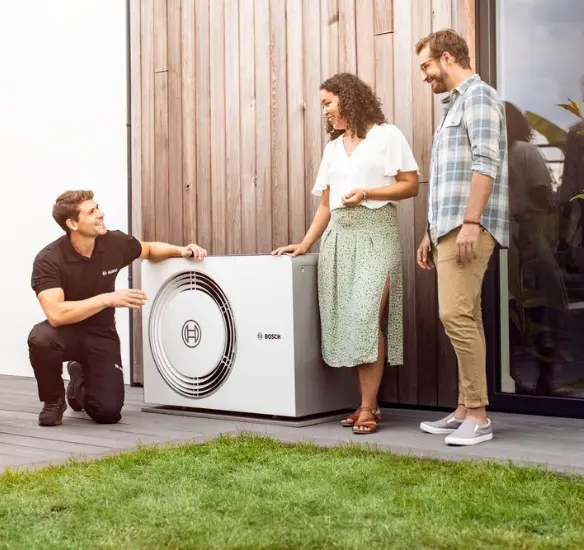
Air source heat pumps are the most common type in the UK. They take in heat from the air outside, even when it feels cold in winter, and use it to heat your home and hot water. Because the air is always available, this option works well for many properties and is why Worcester Bosch offers a dedicated range of air source heat pumps.
How do Ground Source Heat Pumps work?
Ground source heat pumps, as the name suggests, use heat stored in the ground. They involve installing underground pipework to extract that heat and transfer it into your property. While we don’t sell ground source heat pumps, it’s useful to know they exist.
How do heat pumps work - step by step
To understand the process more clearly, here’s what happens inside a typical air source heat pump:
- Capturing heat – The outdoor unit absorbs low-level heat from the air.
- Transferring energy – This heat is passed through a refrigerant fluid inside the system, via the evaporator.
- Compression – The refrigerant is compressed, which significantly raises its temperature.
- Heat distribution – The high-temperature energy is transferred into your heating system, via the condensing heat exchanger, providing warmth for your radiators or underfloor heating.
This process is continuous, ensuring your home has a steady supply of heating and hot water.
How do heat pumps compare to boilers?
A heat pump moves existing heat from outside into your home. This makes it a very different way of operating. Boilers tend to provide higher flow temperatures, while heat pumps work more effectively at lower flow temperatures.
Because of this, some homes may need adjustments such as larger radiators or underfloor heating to get the most out of a heat pump system.
What homes are suitable for heat pumps?
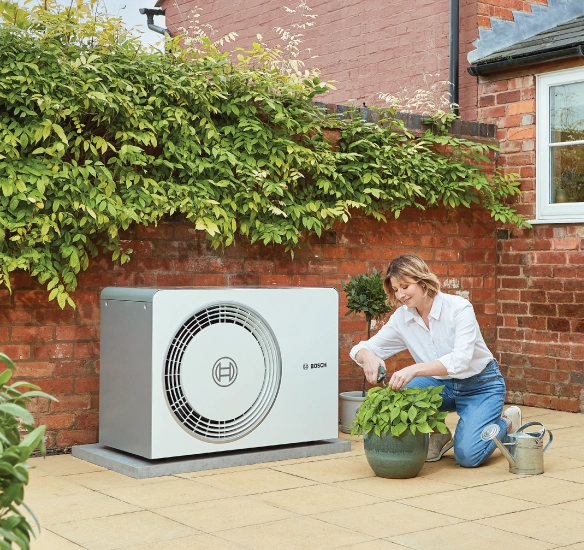
Heat pumps can work in a wide range of homes, but there are a few things to consider. Properties that are well insulated tend to get the best results, as they retain the warmth more effectively. Larger radiators or underfloor heating can also help distribute the lower flow temperatures that heat pumps provide.
An expert installer will be able to assess whether your home is suitable and if any upgrades might be needed.
Ready to make the switch to electrified heating?
Deciding whether to install a heat pump depends on your property, your current heating system, and your future plans. By understanding how heat pumps work, the types available, and what makes them different to boilers, you’ll be in a better position to make an informed decision.
Find out more about our range of heat pumps below.