

What is a heat pump?
First thing’s first, a heat pump isn’t just a different type of boiler.
Boilers work by burning fuel (like oil or gas) to heat up water, which is then transferred to your radiators to warm up your home, or to your taps and showers.
Heat pumps don’t burn any fuel, they run on electricity, and work by collecting air from the outdoors and boosting its temperature via compression. This is then passed onto your heating and hot water system, without using any gas or oil.
How do heat pumps work?
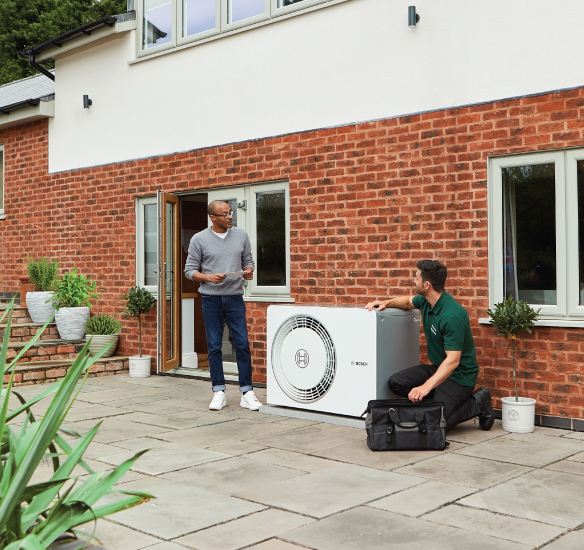
Instead of generating heat by burning fuel, a heat pump moves heat from one place to another.
- Air source heat pumps draw warmth from the outside air and transfer it into your home.
- Ground source heat pumps work in a similar way, but collect heat from the ground via buried pipework.
Both types operate at lower water temperatures than traditional boilers, so they work best in well-insulated homes with heating systems designed for low-temperature operation.
Choosing the right heat pump
Most UK homes can be kept perfectly warm and comfortable with a heat pump, but choosing the right one and making a smart financial decision will depend on multiple factors.
If you’re thinking about heat pumps, ask yourself these questions to get started:
Are you ready for a heat pump?
Find out if your home is right for a heat pump by using our simple checker. Answer a few simple questions and our expert team will be in touch to discuss your options.
Heat pump installation
Heat pumps work differently from traditional boilers, so installation may involve adjustments to your home. For air source heat pumps, this could include ensuring you have good insulation, suitable radiators or underfloor heating, and space outside for the unit.
Ground source heat pumps, while not offered by Worcester Bosch, require more outdoor space and a different set-up, such as underground pipework.
A professional home survey will confirm the best installation approach for your property and whether any changes are needed for optimal performance.
Is it worth it?
Many electricity suppliers are also offering specific tariffs which are designed to minimise the cost of running your heat pump.
Whichever type of heat pump and whatever home you have, your heat pump will deliver 4x the amount of heat compared to the electricity it uses to run. With 300% efficiency, you’ll notice savings in your energy bills from day one, and once those savings pay off your installation costs, your heat pump becomes an incredibly cost-effective source of home heating.
Source: https://energysavingtrust.org.uk/advice/in-depth-guide-to-heat-pumps/
How to get the most out of your heat pump
Efficiency is at the heart of heat pump design, but it’s the way you use it that will really determine how low your energy bills can get, and how small your carbon footprint becomes. There are two big things to remember:
Keep your heat pump switched on
Just like you get more miles per gallon in your car when you’re driving steady on the motorway, it’s best to avoid stopping and starting with your heat pump. They’re designed to maintain a constant, consistent, slightly lower temperature than your boiler. If you switch your heat pump off, it can take a long time to get back up to temperature and may end up costing more than if you just left it on in the first place.
Keep an eye on the weather and plan ahead
You can turn your heat pump up or down, but just like switching it off, this’ll affect its efficiency. The best way to make sure your home always stays warm enough is to pay attention to upcoming temperature changes, and then turn your heat pump up or down by a degree or two. This will stop it working overtime and costing you more in the long run.
Is a hybrid system better for my home?
For some people – especially those in older homes, colder areas, or with busy demanding households – a heat pump may not give them enough control. That’s where hybrid heating systems come in. For most of the year, a heat pump will keep your home warm and comfortable and its carbon footprint low, but when you need an immediate boost of heat or lots of hot water at once – a backup boiler picks up the slack.