

Is your new home’s heating system out of date?
So, you’re getting ready to move and you’re thinking about what your new home’s heating system is like? We can help you take the guesswork out and avoid any surprises once you move in.
By checking the state, age, and history of your new home’s boiler before you move – you can get ahead of the game and book any services, repairs, or replacements that might be needed. Whether you want a newer, better system – or just a few tweaks to bring it up to speed – we’re here to help make sure you’ve got all the heating and hot water you need, without an unnecessarily large energy bill.
What the age of your boiler means
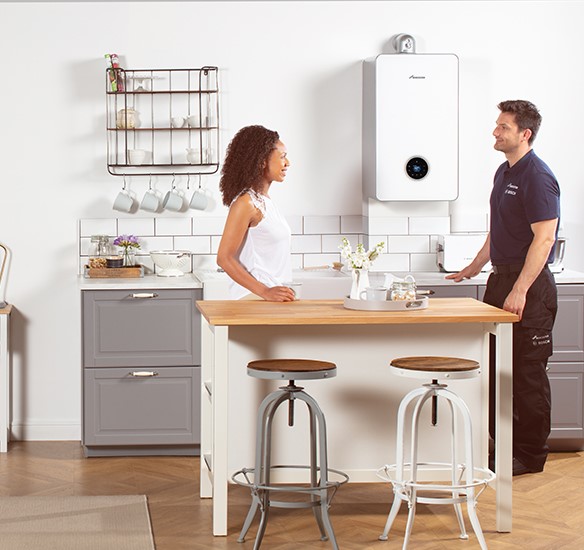
Energy technology moves fast, and boilers get better every year. So, whilst they’re built to last and most people will keep their boilers for 10 or more years without any issues, when you inherit a boiler in a new home you’ll always want to get an idea of its age and whether keeping it or replacing it will be better for you. If you can’t find the boiler’s service history and you want an idea of its performance, you can get a good understanding based on knowing when it was fitted.
Installed after 2018?
Changes in 2018 means that all new boilers installed since then come with a series of smart, weather, or load controls which dramatically improves efficiency.
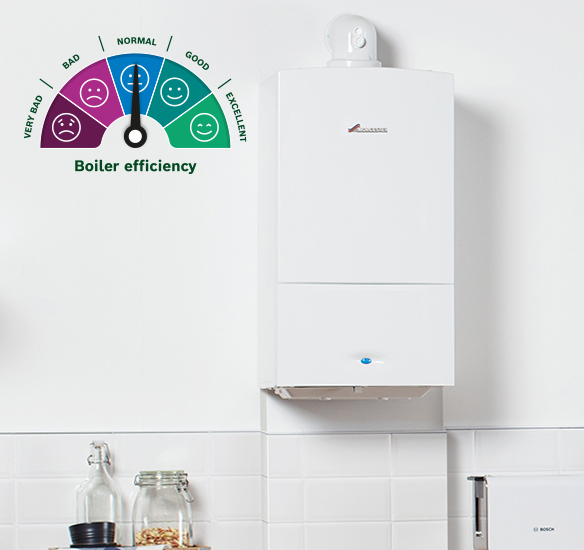
If your new home’s boiler was installed post-2018, it is likely to be extremely efficient, in good condition, and unlikely to need work or replacement, but you can still take steps to save hundreds on your gas bill by changing the way you use your heating and by servicing your boiler regularly.
Installed between 2005 – 2018?
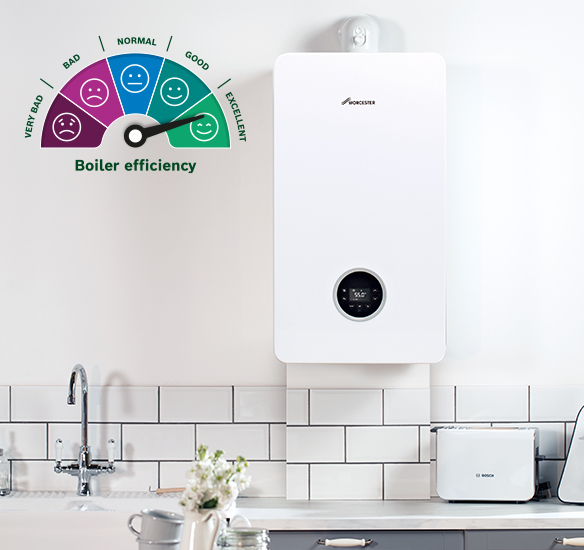
Generally, boilers that are more than 10 years old will have started to see a drop-off in their efficiency and may be costing you more than they should. But whilst all boilers fitted since 2005 are A-rated for efficiency, meaning you probably won’t see huge savings by replacing one, you can still improve it by installing smart controls to boost efficiency and save up to £180* per year!
Boilers from this period may also still be within their guarantee, which means any faulty parts could be repaired or fitted for free.
Installed before 2005?
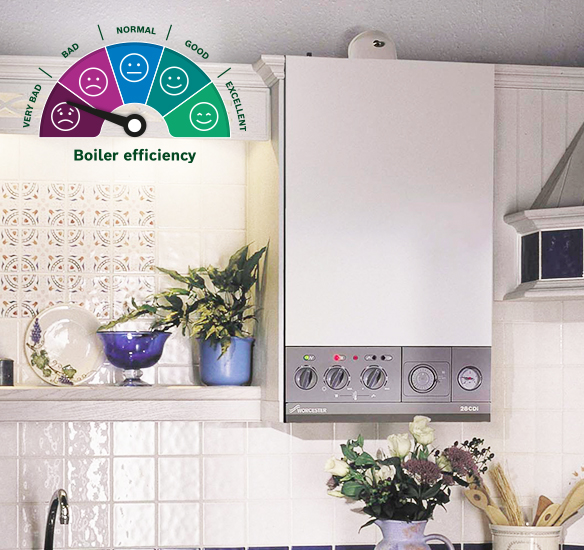
If the boiler in your new home was installed before 2005, it’s likely to be a G-rated non-condensing boiler. This means that it’s going to be inefficient compared to newer boilers, which will result in more usage, higher bills, and a greater environmental impact.
If your new home is detached, you could be spending £840* more per year on bills because of an old boiler. If it’s semi-detached, £540* more, and if it’s a bungalow, £445* more.

Guaranteed better
All of our boilers come with an industry leading, no quibble guarantee.

Rated Excellent
Join the thousands of other happy customers who rate us excellent on Trustpilot.

Quiet Mark accredited
Certified in high-performance noise reduction solutions.
Considering a heat pump or hybrid system instead?
If you’re moving into a home where the boiler is approaching the end of its natural life, you might be wondering whether you can start afresh altogether. And when it comes to swapping your boiler for a heat pump or hybrid system, there are more savings to be found.
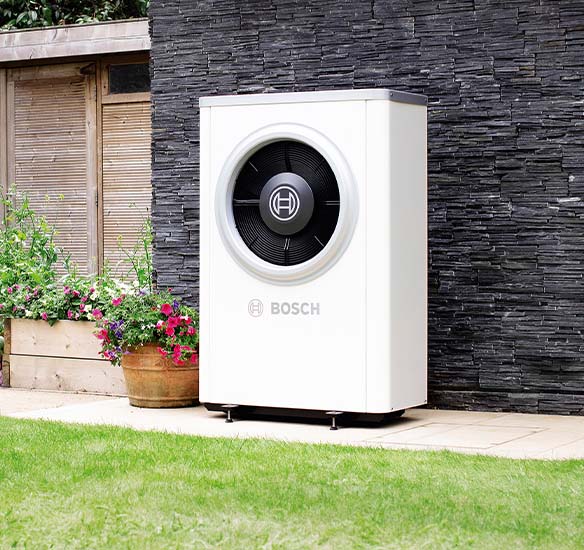
Heat pumps and hybrid heat pumps can reach 300% efficiency, compared to the 90% delivered by boilers – but the electricity it takes to run them is more expensive than the gas that most boilers use.

Get £100 off a new Worcester Bosch boiler
Make your house a home and spend a little less by ordering via our website. When you book your new home’s boiler installation online, through our FastTrack service, you’ll get £100 off your boiler and receive a smart internet controller.
Find a local installer
Each heating system needs custom designing. Find and contact a Worcester Accredited Installer in your area to book a home visit.
After calculating the best system for your home and hot water requirements, your installer will then provide you with a free quote.
Source(s)
*Energy saving tips and associated savings are taken from the Energy Saving Trust, reflecting the October 2022 price cap.