

For homes and families looking to reduce their carbon footprint and their monthly energy bills, heat pumps are an excellent choice. By utilising the natural thermal energy in the air or in the ground, they require no fuels to provide a reliable source of indoor heat.
How heat pumps work
Heat pumps, often called heat pump boilers, aren’t really boilers at all. They don’t burn fuel like a normal boiler does, meaning no gas, oil, or LPG bills for you.
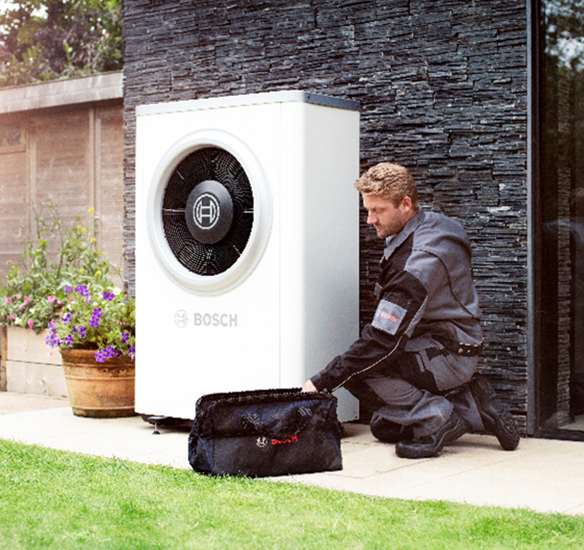
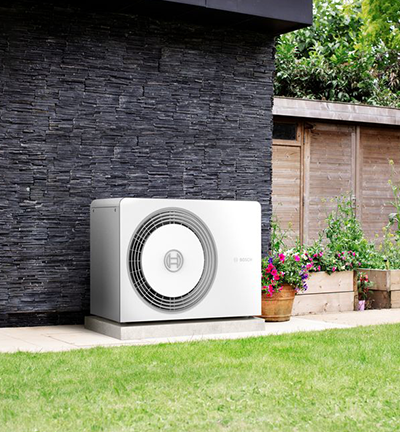
Heat pumps work by collecting energy from the air or under the ground. Air source heat pumps use an above-ground fan system, while ground source heat pumps work using underground metal coils to absorb heat.
Both systems are made more efficient by collecting ambient warmth in refrigerant gases, which are then compressed to increase their temperature, before releasing the thermal energy into your home.
Heat pump vs. boiler
Heat pumps work by keeping your home at a stable, low temperature often called a ‘steady state.’ This means that when you require more heat, or hot water, they are not starting from a very cold position and can heat your home more quickly.
Boilers are designed to be used more intermittently and instantly, which is why they can heat a home quicker than a heat pump. This on-demand usage means more environmental impact and higher energy bills, whereas a heat pump can work much more efficiently.
Benefits of heat pump boilers

Highly efficient
Both types of heat pumps produce more heat than the electricity required to run them.

Carbon-reducing
By utilising natural energy sources, heat pumps are a fuel-free solution and emit no CO2.

Grants and discounts
Heat pumps are exempt from VAT and are eligible for grants to reduce installation costs.
Heat pump installation
Installing an air source heat pump is the simpler, quicker, and cheaper of the two options. You will need to have two units installed – one outside to collect the energy from the air, and one inside to release heat into the home.
Homes with good insulation, modern windows, and minimal heat loss are ideal for heat pump installation. If your home needs improvements, your installer can advise on the best steps.
Find out more